The two-acre snorkel trail under the Blue Heron Bridge sits in 6 to 10 feet of water at Phil Foster Park. When the tide is flowing hard, that shallow water is a struggle. When the clear ocean water floods in at high tide, the trail is at its best. The tide table sets the schedule here, not the clock.
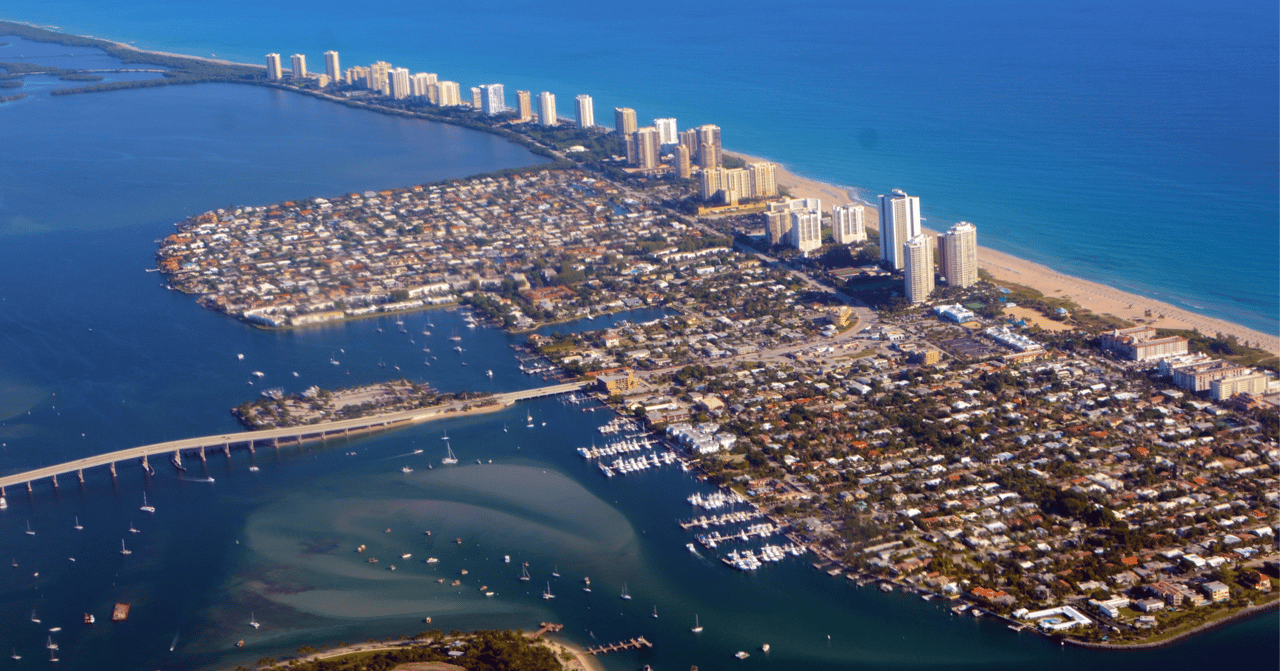
Pine Point Road sits at the southern end of Singer Island along the Lake Worth Lagoon, so the bridge is close by for people on that end of the island. Living nearby still doesn't make it a sunrise habit. The good hour moves every day, and from now through winter it brings its best sightings and some of its busiest weekends.
Why the Good Hour Moves Every Day
The bridge spans an inlet channel, and the water under it moves with the tide. Pura Vida Divers explains that strong current outside slack tide makes diving hard. Low slack tends to bring murky water. High slack brings in clearer Atlantic water. High tide comes a bit later each day, so the window shifts with it.
The two shops closest to the bridge describe that window a little differently. Force-E suggests going from about one hour before high tide to about one hour after. Pura Vida suggests getting in about 30 minutes before high slack. These are tips about water conditions, not park rules. The county allows diving from sunrise to sunset, outside the guarded swimming area. Both shops agree on the main point: plan around high tide.
There's one catch with tide tables. NOAA still posts 2026 tide predictions for its Port of West Palm Beach station, but the station page says the instrument there was removed in 2010. Those numbers are predictions, not live readings. NOAA's Lake Worth Pier station is still listed with no removal date, but it isn't at the bridge. Force-E also posts a high tide table built for this dive site on its Blue Heron Bridge page.
What Winter Brings In With the Tide
Planning around the tide pays off most in the colder months. According to Force-E's winter guide to the bridge, the shallows turn into "seahorse city" in winter. The seahorses live shallow enough to see while snorkeling. The same guide lists other winter sightings:
- Manatees. The Florida Power and Light plant in Riviera Beach draws them in from the ocean to warmer water, so you're more likely to see them as the water cools. They're protected by law, so don't chase or touch them.
- Spotted eagle rays and nurse sharks. These are common in winter, helped by clearer, cooler water.
- Jawfish brooding eggs. Jawfish carry their eggs in their mouths and turn them now and then to keep them supplied with oxygen.
- Nudibranchs. Look slowly along the weeds and grasses.
- Young octopuses. They're most active at night.
- Schooling fish on the snorkel trail. Look for sheepshead, angelfish, barracuda and spadefish when the blue water floods in at high tide.
Weather changes the timing too. Force-E says cold fronts start arriving around November, and the cycle of front, cleanup and warm-up repeats until about mid-March. The water gets stirred up when a front comes through. After a few calm days, visibility can reach 30 feet. So the best winter session is a high tide that falls a few days after a front has passed.
Water temperatures stay fairly steady through the season. Force-E puts the winter average around 74°F. It usually bottoms out near 72°F around the second week of February and rarely tops 76°F. That's cool enough that people who get cold may want up to a 7 mm wetsuit. Others are comfortable in 3 mm or 5 mm.
Weekends Shrink the Window
The bridge is protected from open-ocean swell, so wind rarely cancels a dive there. That protection is also why weekends fill up. When wind keeps offshore dive boats in port, divers who planned to go out head to the bridge instead. Force-E says weekends stay busy even on stormy or windy days. Weekdays, night dives and off-peak hours are quieter.
Parking at Phil Foster Park is free, but Force-E notes that trailer spaces are off-limits to regular cars and weekend spaces fill early. The Palm Beach County park page says trailer spaces are only for tow vehicles with trailers, and a daily boat-trailer parking permit costs $15. The boat ramps are open 24 hours. The beach is guarded and has restrooms and showers. Beach hours are sunrise to sunset. On a Saturday when high tide is mid-morning, everyone is aiming for the same lot at the same time. Force-E's advice for weekends is to arrive well before high tide so you still get a full dive.
Families should know the county says the playground is closed until further notice "in preparation for new playground facilities." No reopening date has been posted.
Four Nights Set by the Tide
Force-E's free night dives show the tide setting the schedule. The park normally closes at sunset to divers. For these nights, Force-E gets a permit so divers can park and dive at Phil Foster Park after dark. Here are the remaining 2026 dates from the Force-E night dive schedule:
| Date | Day | Dive window |
|---|---|---|
| November 7 | Saturday | 5:44 to 7:44 p.m. |
| November 23 | Monday | 5:44 to 7:44 p.m. |
| December 6 | Sunday | 5:18 to 7:18 p.m. |
| December 22 | Tuesday | 5:21 to 7:21 p.m. |
Only one of the four falls on a Saturday, and the two December dives start more than 20 minutes earlier than the November ones. Conditions can still cancel a night. The October 24 dive was canceled for poor visibility, so check the live schedule before you go.
You need to check in first, and timing matters. Every diver checks in at Force-E Riviera before the event, signs a waiver, shows proof of dive certification and picks up a parking pass. Cars without a pass get ticketed. The shop closes at 8 p.m. on weekdays and 7 p.m. on weekends, so all check-ins have to happen before then. It's a one-tank dive in 5 to 25 feet of water. Each diver needs a light on their tank. Each group needs a state-legal dive flag with a light mounted on top. Everyone must be out of the park by 10 p.m. The permit covers only scuba diving and snorkeling.
The Flag and the Channel Under the Bridge
The bridge is also a busy stretch of the Intracoastal. According to its published boating regulations, the Florida Fish and Wildlife Conservation Commission requires a divers-down device whenever a diver or snorkeler is underwater. A flag shown on the water must be at least 12 by 12 inches, red with a white diagonal stripe, and kept unfurled. In rivers, inlets and navigation channels, FWC says divers should stay within 100 feet of their flag. Boaters should keep at least 100 feet away and slow to idle speed if they have to pass closer. We're summarizing FWC's rules as general information, not legal advice. Confirm the current requirements with FWC before you head out.
Both nearby shops tell divers to stay out of the marked boat channels. Pura Vida points out one that runs parallel to shore and under the large bridge. Force-E's night dive instructions also say to stay out from under the fishing pier. Group lessons and instructor-led night dives need a county permit, which is why organized groups usually go through a shop.
Gear Up Near Home
You don't have to drive far for gear. Force-E Riviera is at 155 East Blue Heron Boulevard and offers rentals, instruction and air and nitrox fills. Pura Vida Divers is at 2513 Beach Court on Singer Island and offers rentals plus day and night guides for the bridge. If you want to find the jawfish or seahorses without searching the grass beds yourself, a guide who dives the site often will know where to look.
On the trail itself, the county built the reef from 600 tons of limestone boulders and prefabricated reef modules. Pura Vida says it opened in August 2012 and includes shark statues and sunken boats. Force-E reminds snorkelers to use reef-safe sunscreen and bring a reusable water bottle even in winter, and to keep fins up on surface swims so they don't disturb seahorses in the shallows.
At John Nugent Group, we follow what's happening along the south end of Singer Island, from the snorkel trail under the Blue Heron Bridge to the marinas along the lagoon. If you're weighing how close a building or home is to the water you actually use, Contact Us and we'll walk you through the details.